
Program Overview
The Community Brigade Pilot Program is a trailblazing partnership designed to help bridge the resource gap between professional first response agencies and local communities during disaster events.
Our Mission is to create lasting cultural change, strengthen the resilience of communities, and empower them to better prepare for, respond to, and recover from disasters.
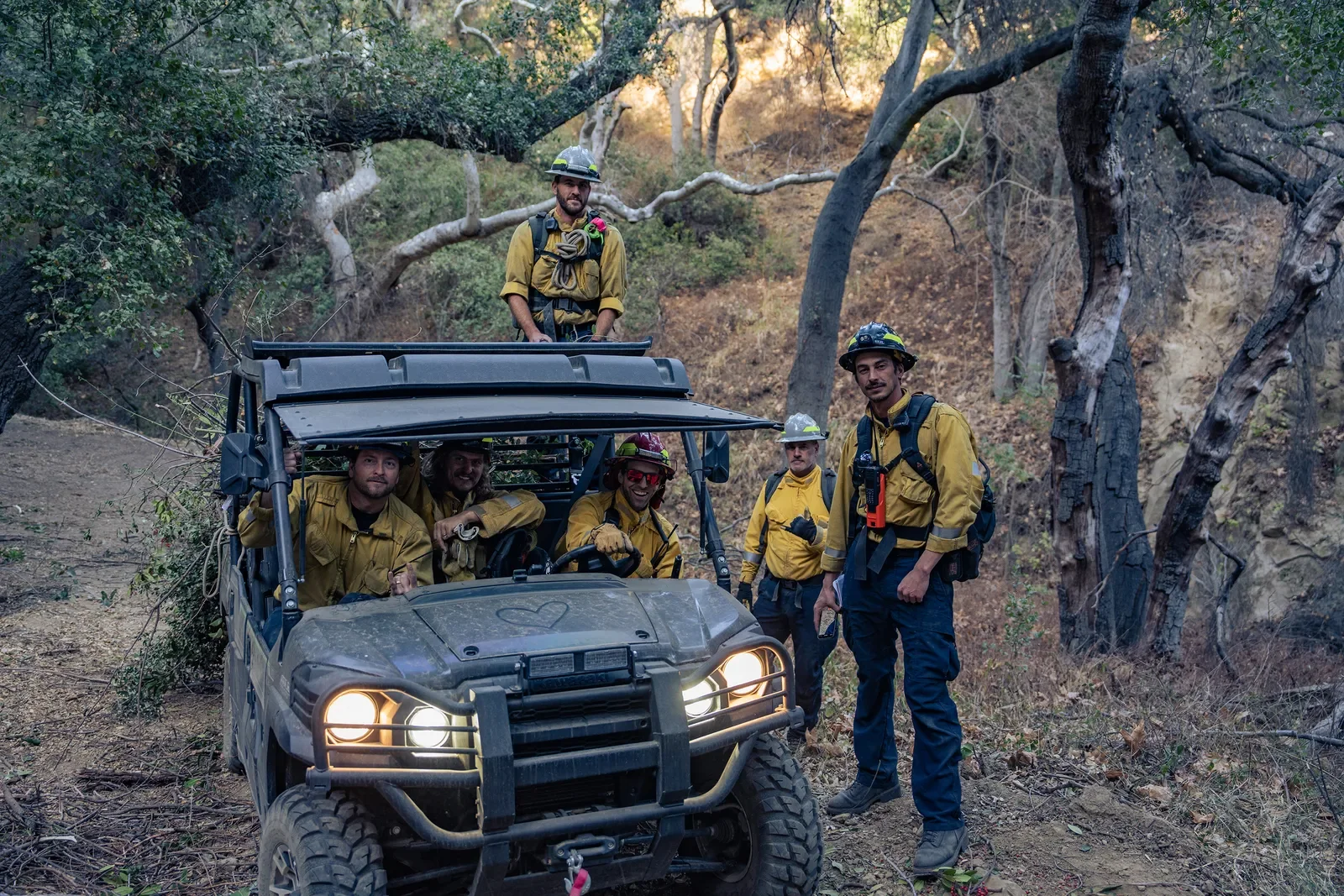
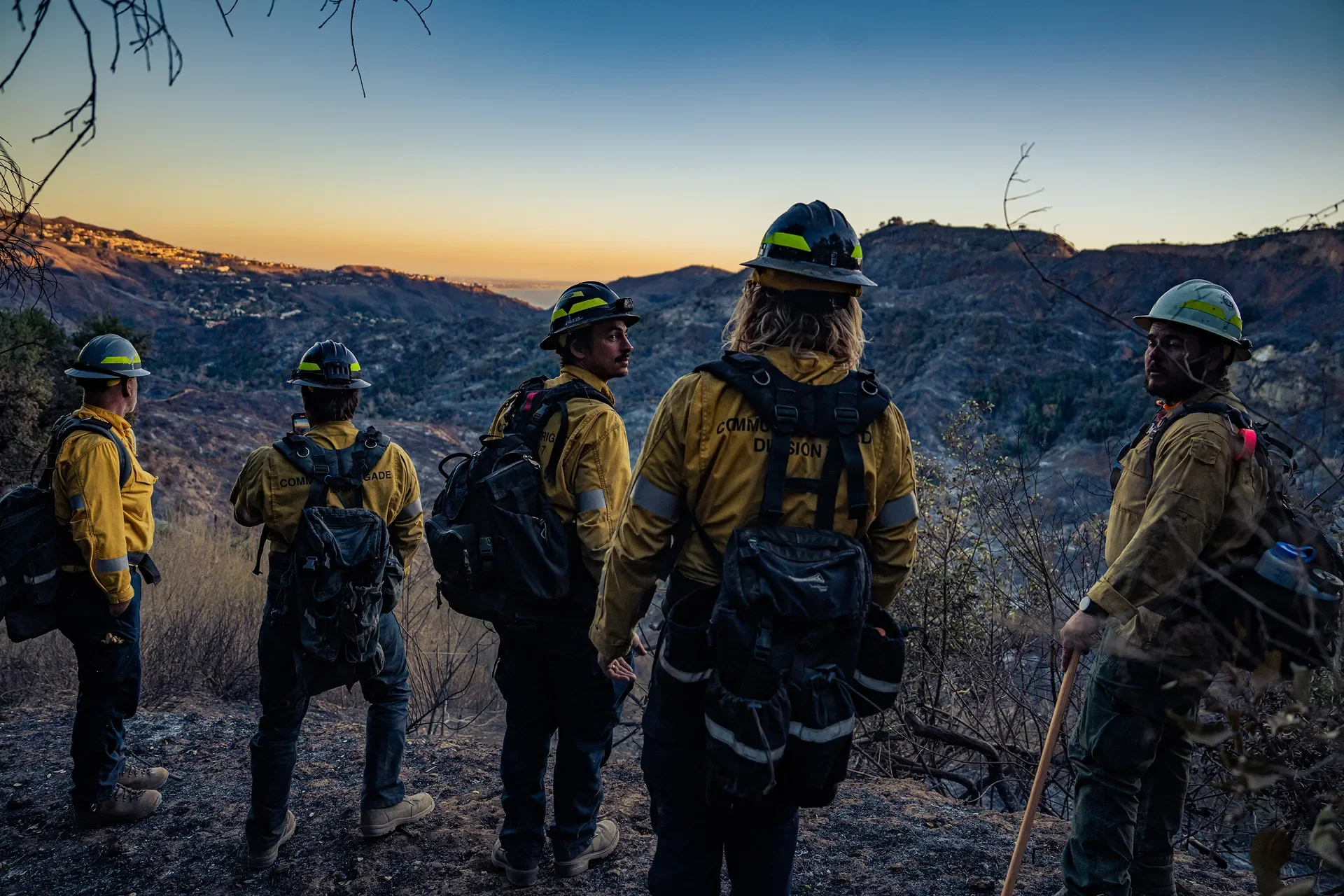
Volunteers are trained in fire behavior, communications, home hardening, and operational procedures in order to assist in achieving incident objectives.
Acting as trusted resource multipliers with intimate local knowledge, they will enhance the support available to responding agencies during wildfires and other disasters.
Initially launched in 7 pilot communities in the Santa Monica Mountains in partnership with Los Angeles County Fire, the goal is to assist in expanding the program to at-risk communities across the west.
Navigate this page
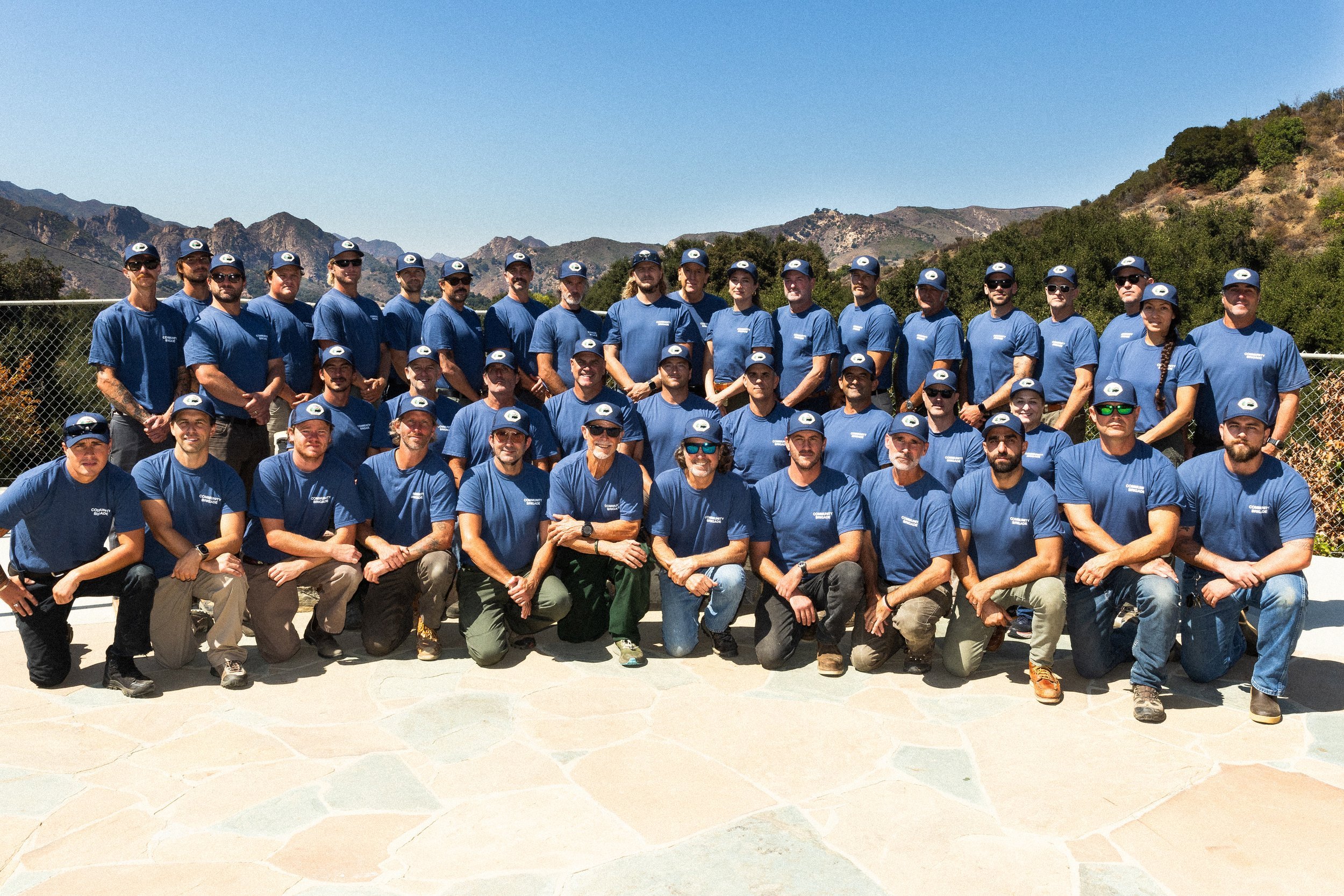
Community Brigades are volunteers committed to protecting their communities from disasters.

Volunteers are trained in disaster preparedness, response, and recovery.
In the Media







Pilot Communities
Malibu West, Point Dume, Big Rock, Hidden Hills, Corral Canyon, Topanga Canyon, and County Line Communities
Partners

Program Scope
All Hazards
Life Safety
Community Preparedness & Resiliency
Credibility & Trust
Operational Readiness
2018 Woolsey Fire
1994 Northridge earthquake
Why Community Brigades?
We believe that if there is shared risk, there must also be shared responsibility.
Without greater community engagement and acceptance of risk and responsibility, government agencies will confront impossible battles and high expectations during extreme events.
Consider these current realities:
1. Disasters are inevitable.
Disasters outpace our current resources and community resilience.
These emergencies present a multifactorial problem requiring an integrated approach
2. Expectations are unrealistic.
During major disaster events, expectations often tend to be unrealistic.
Shared ownership in the outcome of disasters encourages communities to take responsibility over their own risk exposure.
3. Rebuilds are challenging.
Enormous cost, time, and effort are required to rebuild after a disaster.
When rebuilding, communities grapple with the realities of limited insurance coverage, stringent regulations, and complex logistics.
4. Resiliency has decreased.
Modern society has become increasingly disconnected from accepting ownership of their own risk exposure.
This trend places too large a burden on the response capabilities of government agencies.
Empowering communities and individuals with information and tools encourages accountability and inspires lasting cultural change.
Preparation
We support communities in both their preparation and response to disasters.
Experts calculate that pre-event mitigation provides an 8-to-1 cost benefit ratio. Therefore, we believe that long-term pre-event mitigation is the most efficient method for disaster preparedness.
Our approach includes:
1. Organizing community awareness meetings and establishing collaboration
2. Identifying neighborhood strengths and vulnerabilities
3. Considering Fire Safe Community designation objectives
4. Participating in the Ready, Set, Go! initiative
5. Home Ignition Zone Assessments
Home Ignition Zone Assessments
A key part of our approach to disaster preparedness and mitigation is to conduct Home Ignition Zone Assessments. With support from a grant from CALFire, we have created a custom-built assessment tool to assess homes and properties and identify risks in the event of a disaster.
This service is offered for free for homes and businesses.
Assessments consider all parts of a home or property, from “Roof to Ground to Perimeter” including structure and vegetation.
Assessments integrate “best practices” from a combination of authorities and sources:
CALFire, LA County Fire Department, National Fire Protection Association, and the Insurance Institute for Business & Home Safety
State and local laws and regulations
Accredited research, subject matter experts, and mitigation specialists
We offer an official acknowledgement of successfully assessed homes and properties and track the outcomes in the event of a disaster.
Response
We acknowledge the reality that empowering all at-risk homes to become resilient is no easy task and that this cultural change takes time. Therefore, the Community Brigade program also focuses on disaster response.
Homeowners have learned best practice techniques for how to defend homes during previous wildfires and have passed down this wisdom to younger generations. We believe that this ‘homegrown wisdom’ of communities continues to be a vital tradition to promote and support.
Additionally, as the battle mounts to respond to a growing number of disasters, relying on community leaders during disasters will help alleviate the strain on first responders and allow communities to take responsibility for the results of their own response.
We focus on the following aims to support communities in their disaster response:
1. Communication
We aim to serve as a trusted communication link during disaster events to maintain and disseminate timely, accurate, and actionable information to those who need it.
2. Situational Awareness
We aim to develop a detailed understanding of the communities we serve: topography and geography, community demographics, actual resources available, and realities on the ground. We aim to be a trusted source and recipient of this critical information.
3. Empowering Community Leaders
We have observed that well-adapted community leaders will step up to serve in any disaster. We aim to empower these leaders and enable them to become force multipliers in their community, inspiring more community members to step up and take responsibility to protect their community.
4. Transforming Community Culture
As we work with communities on action-oriented disaster preparedness and mitigation, we also aim to help build trust, involvement, and collaboration within these communities so that they can come together for a more effective response in the event of a disaster.
Program Origins & History
The Community Brigade program represents a highly innovative evolution of traditional localized volunteer fire brigades combined with government agencies and fire departments operating in a well-defined collaborative manner.
Volunteer Fire Brigades in the Santa Monica Mountains have been around for many years. A few examples include the Monumental Fire Company, formed in 1875, a group which rode and patrolled the hills in the Malibu and Ventura County geography. In 1925, the Topanga Volunteer Fire and Forestry Department was formed as a community driven effort. Jumping ahead, following the Corral Fire, Matt Haines and his team created the Corral Canyon Fire Safety Alliance in 2009. In 2010, Dermot Stoker began his work on creating the Malibu West Fire Brigade which became a model for locally focused teams.
The 2018 Woolsey Fire represented a major shift regarding the needs of local communities when faced with the possibility of catastrophic loss where government response resources may not be adequate.
This gap motivated numerous residents to work together in defense of their homes, including in Paradise Cove where several residents remained to protect structures and created the Paradise Cove Fire Safety “Brigade.” The Malibu West Volunteer Fire Brigade provided situational awareness and saved several homes. The Point Dume Bombers consisted of a handful of residents and friends who came together to defend homes and provide support. At County Line, local residents worked with fire department resources in setting up a staging area and identifying sources of water.
While each of these volunteer brigades and teams worked hard to address the impact of fire on their community, the gap between the overall needs of the community and the capabilities of government agencies remained.
A new approach was needed, one that integrated the capabilities of community volunteers with those of government (the fire department) in a manner that could close the gap and provide a unified and structured response across the expansive Santa Monica Wildland Urban Interface geography.
In 2019, the independent report on The 2018 Woolsey Fire: A Catalyst for Change written by Dr. Shirley Jensen, LAEPF Board Member Dr. Steven Jensen, and LAEPF Chairman Brent Woodworth on behalf of the Los Angeles Emergency Preparedness Foundation (LAEPF) was published which included a detailed roadmap to resiliency—outlining specific high leverage programs that, if implemented, could lead to a cultural shift and a new collaborative approach to wildfire preparedness and response. Specifically, the following high priority program was recommended for implementation:
“Engaging certified local community volunteers trained, properly equipped, and operating with communication and direction from fire command could provide “fire-front-following” support and suppression capabilities needed to address peak load resource requirements while building community trust and confidence.”
This program, originally called “Fire-Front-Following” (a fire department term for the actions being proposed) eventually became the Community Brigade Pilot Program.
With the release of the Catalyst for Change Report, a decision was made by the LAEPF Board of Directors to officially support the creation of the proposed program. The team proceeded to obtain the operational and legal support of the Los Angeles County Fire Department and the Los Angeles County Board of Supervisors.
Brent Woodworth and Dr. Steven Jensen began exploratory discussions with multiple academic institutions, interested community residents, and government officials. A series of program formulation meetings began led by Brent Woodworth with Chief Drew Smith, LACoFD Liaison Officer Megan Currier, Dr. Steve Jensen, Dr. Shirley Jensen, Mikke Pierson, Jerry Vandermeulen, Terri Pond, and Chris Frost. Over time, additional personnel were invited to join the project advisory team including Dermot Stoker, Matt Haines, Jefferson Wagner, Keegan Gibbs, Colin Drummond, Richard Garvey, Todd Prince, James Grasso, Mike Woodard, Bill Winokur, David Hertz, Jeff Grier, Chris Brossard and others. All of these 22+ individuals contributed to the creation of the Community Brigade pilot program.
The development and approval effort took 5 years with key milestones including gaining the approval of the Firefighters Union Board, the promotion of Anthony Marrone to Chief of the Los Angeles County Fire Department, collaborative negotiations with Jenny Tam (attorney for LACoFD), monthly presentations, and the unwavering support of LACoFD Assistant Chief Drew Smith.
In October 2023, LA County Supervisor Lindsey Horvath brought forward for approval by the County Board of Supervisors the proposed Community Brigade pilot program partnership between the Los Angeles County Fire Department and the Los Angeles Emergency Preparedness Foundation. Receiving unanimous approval, LACoFD Chief Anthony Marrone and LAEPF Chairman Brent Woodworth signed the official Memorandum of Agreement officially launching the Community Brigade Pilot Program.
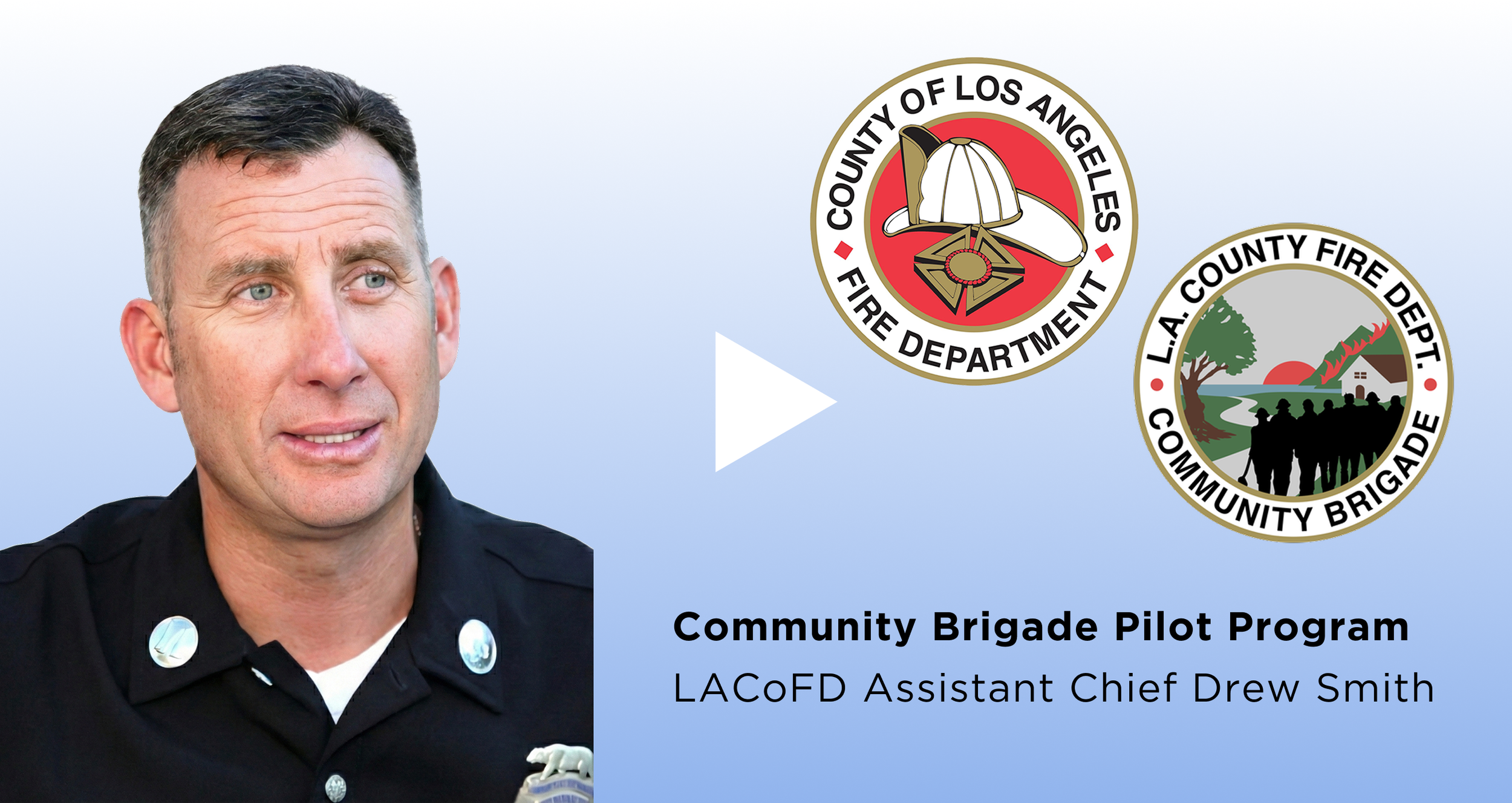
LACoFD Presentation
Watch LA County Fire Dept. Assistant Chief Drew Smith’s PowerPoint presentation on the Community Brigade Pilot Program.
Applied Research Study
Trial by Fire is a 2026 applied research study on the Community Brigade Pilot Program.
Led by experts at the California State University, Long Beach in collaboration with the Natural Hazards Center of the University of Colorado, Boulder, the study evaluates the Community Brigade pilot program during recent Malibu wildfires. The study highlights how the program strengthens coordination between communities and responders, builds trust, and empowers residents to take an active role in wildfire preparedness and response.
Key findings from the report:
“The Community Brigade serves as a vital connection between the community and the fire response system. Brigade members, in their capacity as valued members of their community, shared insights with their fellow community members about the depth and breadth of the official response.”
“The Community Brigade was also activated to conduct evacuations. Previous experiences in the Broad and Franklin Fires indicated that residents were more likely to evacuate when encouraged by Brigade members than officials. As a result, people were evacuated safely during both the Franklin and Palisades fires while the official response focused on structure protection and other pertinent activities.”
“During the Franklin and Palisades Fires, Community Brigade members successfully protected important institutions, such as a church, and cherished family pets. Their care during that disaster is believed to have created greater trust and interest in the program, which has since received hundreds of applications from prospective volunteers.”
“Representatives of the responding fire authorities confirmed that the Community Brigade increased the general public’s understanding of wildfire risk and incident command, which could result in safer, better-informed decisions before and during fires as well as new approaches to reduce overall risk.”
Connect with us
If you have any questions or feedback, please contact us below.
Select Sign up for news and updates to subscribe to our mailing list.
Support us
Your contribution supports our efforts to establish Community Brigades in pilot communities around Los Angeles.
99% of your donation will go directly towards disaster resilience programming. No one takes salaries in our organization.
LAEPF is a registered 501(c)(3) nonprofit organization. All donations are tax-deductible in accordance with all applicable laws. Our IRS tax identification number is 26-3378460.